As men much wiser than I have observed often over the past decades, humanity has achieved the scientific knowledge and technological power to accomplish extraordinary things at precisely the moment when we have lost the moral compass necessary to determine whether we should do such things. Science in the post-Christian age is not the enlightened era of science fiction lore; it is swiftly becoming a dystopia that more closely resembles Mary Shelley’s Frankenstein.
There is more evidence of this almost weekly. The most obvious and culturally fractious example, of course, is the hotly-disputed concept of so-called “gender affirming care,” which has medical professionals attempting to turn little boys into little girls and vice versa via a Mengele-like combination of castration, puberty blockers, and hormone regimens. The “reproductive industry” creates children in petri dishes for purchase by prospective parents, including homosexuals with no relation whatsoever to said children. The ethical snarls this has created should be a source of debate; sadly, it rarely is.
I often wonder what it would take for people to become uncomfortable with these “industries.” The transgender medical complex, at least, is increasingly under fire in both Europe and the United States; the reproductive industry is still largely accepted, even by many Christians (for the Christian case against IVF, watch this interview with Stephanie Gray-Connors). But stories like this one, from the Sydney Herald on January 5, should make us stop in our tracks:
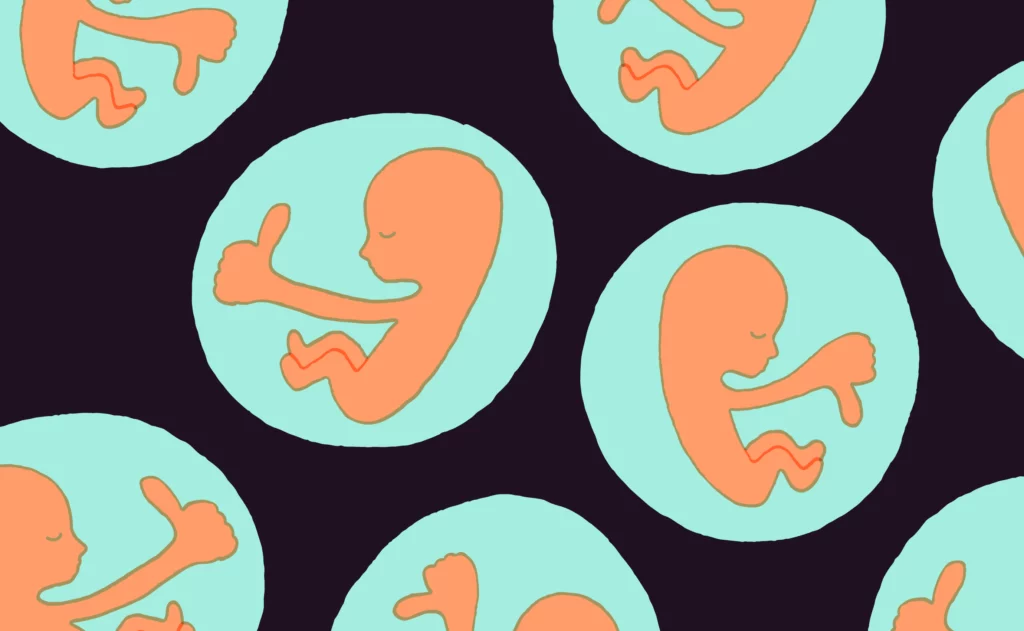
Artificial intelligence is being used in Australian fertility clinics to help choose which embryos should be transferred into patients, with the potential to be dehumanising for parents and babies, researchers say. Allowing machine learning to make decisions about “who is brought into the world” without ethical oversight of its introduction could erode public trust in fertility clinics, say authors of an Australian paper that raises bioethical concerns.
Professor Catherine Mills, head of Monash University’s Reproduction in Society research group and one of the authors of the paper, said IVF patients and partners might not know if AI had been used to help select which of their embryos to use, or how algorithms were trained to make their choice.
While I am encouraged to see that researchers are experiencing ethical concerns, it must be noted that this is rather like slamming the barn door firmly shut after the horse has already absconded across the field. IVF facilities already decide “who is brought into the world” – this is about deciding which of those human beings is allowed to be born, if indeed they survive the process. Once we decided that it was acceptable to commodify human beings by creating them artificially as a product for purchase, it was inevitable that we would begin to apply selective criteria to which embryos get a further chance at life. In fact, we already do that as a matter of course, and “selective reduction” abortions are frequently used to further accomplish this.
But the use of artificial intelligence in this process, it seems, is causing belated discomfort. From the Sydney Herald:
Artificial intelligence carries a risk of unintended bias, according to the paper published by the European Society of Human Reproduction and Embryology. This includes that “ML [machine learning] algorithms will perform better for members of some groups than others (eg based on ethnicity)”. The technology may “take into account features that patients would not want to influence the choice of embryo (eg if the AI system is more likely to recommend transferring embryos of a particular sex or, theoretically, embryos with disease traits that happen to correlate with a higher chance of implantation)”.
Again, I have to emphasize: We already do all of that. This is simply introducing another technology into an already profoundly dehumanizing technological process. Indeed, the article noted that “Australia’s booming fertility industry” is “estimated at $US922.9 million ($1.49 billion) in 2023 and is expected to reach $US1.63 billion by 2030.” Some facilities are streamlining the process with AI, in order to “improve selection of embryos and the chances of successful pregnancies, and to reduce the time to pregnancy and cost of treatments.”
And why not? The existence of a “fertility industry” already affirms the premises behind the usage of such technology.
Bioethicist Dr. Julian Koplin says that the primary concern is that there are no guidelines or regulations. “And it may be the case there is someone who doesn’t want decisions about what children they are having being made by AI rather than a human embryologist assessing it themselves,” Koplin said. “[Algorithms] are beginning to make decisions about who is brought into the world.”
We are at the very beginning of the AI revolution, and this story gives a glimpse of its dystopian aspects. AI is already being used to select which embryos will be given a further chance at life. Undoubtedly, it will eventually be used in a similar fashion on born patients, triaging which patients are “worth” caring for, and which are not; those who are not can receive a recommendation for euthanasia, perhaps. Canadian medical professionals already routinely offer so-called “medical aid in dying” – assisted suicide – to patients. A system of death panel-by-robot could simplify all that and give medical professionals a much-desired degree of removal from this distasteful process. We are acquiring new powers and new technologies – but we have already abandoned our ethics.