It was morning in Israel when Daniel Lischinsky opened the family WhatsApp chat and saw a message from his youngest son. There had been a terrorist attack in Washington. Ben-Ami worked at the Israeli Embassy in Ecuador; he told them that their son Yaron, an embassy staffer, had been involved. Daniel replied that he would go to the Foreign Office to ask for information before he went to work.
“No, don’t go,” his son told him. “They will be in contact with you.”
“My youngest son, he knew already,” Daniel told a gathering of the Jewish and Christian communities at Toronto’s Calvary Church on July 20. “He works in security, and when something like this happens with somebody from the embassy, they know immediately. The world fell on us. We didn’t know what happened. We didn’t know where we were. It’s something that you never imagine. Something you never prepare yourself for.”
***
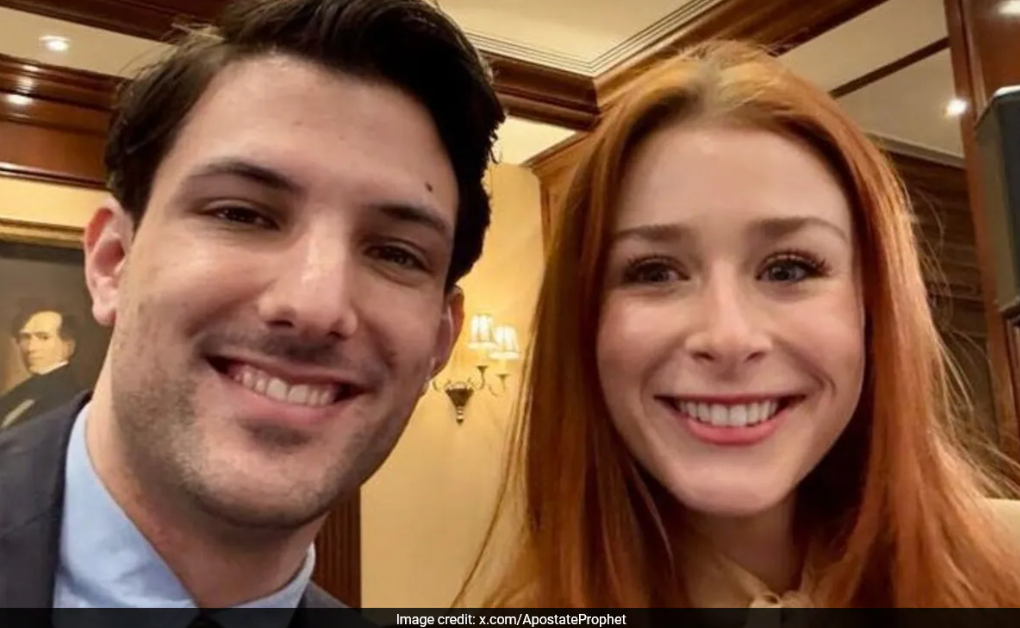
On the evening of May 21, 30-year-old Yaron Lischinsky and his red-haired girlfriend 26-year-old Sarah Milgrim were leaving a diplomatic event at the Capital Jewish Museum in Washington, D.C. The event featured discussions on how to get more humanitarian aid into Gaza. As the couple left, a man who had been pacing back and forth outside swiftly walked past them. Elias Rodriguez then turned to face their backs, drew a semiautomatic handgun from his waist band, and opened fire.
Yaron and Sarah collapsed; Rodriquez walked closer, leaned over them with his arm extended, and fired again. Sarah tried to crawl away; he followed her, shooting. Court documents record that as she tried to sit up, he reloaded, and then shot her several more times. Police found 21 spent casings at the scene. Rodriquez announced that he murdered them “for Gaza,” and chanted “Free, free, Palestine!” as he was arrested. Few press outlets mentioned the fact that Yaron and Sarah were Messianic Jews.
The news cycle swiftly moved on. A young Jewish couple was gunned down in public because they were Jewish, on the streets of the American capital. After October 7, even those who were horrified were no longer shocked.
***
In the wake of the killings, Yaron’s heartbroken father has decided to dedicate part of his life to combatting the “monster” of antisemitism, which he called one of the “powers of darkness that the rabbi Paul speaks of in Ephesians 6.” Antisemitism, he told those gathered at Calvary Church, is demonic, and it is growing. “We would like that it will be the last time, the last victim,” he said, face etched with grief. “And of course, like in our case, you never think that your family will be victims of antisemitism.”
Yaron was one of five Lischinksy children; the family lives in a small town near Jerusalem. School is followed by military service. “When the children are in the military, you are always afraid,” Daniel told us. “Something can happen. They can have an operation in a dangerous place. When they finish military service, you are relieved. You are happy. They have finished a dangerous time.” He never imagined that Yaron’s job at the embassy in Washington would be dangerous.
Then came October 7, an orgy of rape, kidnapping, torture, and murder that unfolded inside Israel. Daniel and Ruth could not believe what they were seeing on TV. In Washington, Yaron volunteered to work in a special room set up in the embassy to review footage, clip video, and work to show the world what Hamas was doing, sending the evidence to the press, TV channels, and other diplomats. This was no easy task. It was the most lethal day for the Jewish people since the Holocaust.
“There, he met his girlfriend, working in all this horror, preparing the movies and attending the media and TV,” Daniel said. “There they met and fell in love. The people say they were a beautiful couple. They were. Sarah from Kansas City. Yaron from Jerusalem. They were already serious. Yaron wanted to get engaged. They were coming to Israel so that we can meet Sarah before the engagement.” The trip to meet the family was scheduled for five days after their lives ended on the Washington sidewalk.
“When they went out”—here, Daniel’s voice cracked slightly for the first time—”this terrorist, this crazy man, was waiting for them, and shot them in the back in the middle of the street just a few blocks away from one of the main buildings of the FBI.” The following morning, local rabbis arrived to scrub Yaron and Sarah’s blood from the sidewalk.
“They were going to get engaged, to get married,” Daniel said. “We were already planning where the wedding will be. The grandchildren—you already imagine how they will be. Red hair? Or black hair? You never imagine that one day we will bury one of our children. It’s against nature. The children need to bury their parents.” When he mentioned red hair, I immediately thought of the Bibas children, and wondered if others did, too.
“That day, that moment, changed our lives. We were in shock.” He paused as a car roared by on the street outside, and apologized. It sounded like an air raid siren, which he is accustomed to hearing in Israel. “A lot of people around the world began to pray for us. We have five children, so we need to be strong, and we need to continue living for our four other children. You need to continue your life for them, for the grandchildren, when they come.”
***
In the wake of the murders, Daniel leans on his faith.
“It’s very difficult, but we feel the strength that comes from God; we feel that a lot of people are praying for us; the Lord is giving us strength and taking us forward I decided that I will give part of my life to fighting against antisemitism,” he said quietly. “To tell the story of Yaron and Sarah, that they will not be forgotten and that we will understand that antisemitism is alive, it is a monster that is lifting up its head and he is killing and destroying.”
“The Bible says that the enemy comes to destroy; he is a liar and he comes to lie and to destroy, and the liar is looking for who he can devour. That is what we are fighting.” Jews need to be careful, he told us. Even on the streets of Toronto. Especially wearing the Star of David.
The evangelical community, Daniel said, has been the best friend the Jewish community has. “It is very encouraging for me to see the Jewish community and the Christian community together. I belong to both of them, so for me, it is much more easy to do the work I am doing. We Jewish people get strength from that; we see that not everybody hates us; there are people that love us and pray for us. It is important for us that they know our story.”
“We need to be careful, of course, when we are here.” Daniel gestured to the security guards that guarded the doors of the sanctuary and had checked each of us at the entrance when we came in. “But we need to open ourselves. We need to be proud of being Jewish—of our story, of our legacy, of who we are. We don’t need to lose it—even me, a Jew who believes in Jesus. I don’t assimilate. I still belong to the Jewish people.”
To the Christian community, he offered a plea. “The Jewish people are in times of trouble, and it is time to stand with the Jewish people and to tell them that ‘you are not alone.’”
“I want to finish giving thanks to the Almighty God, because only to Him belongs all the honour, and the glory, and the praise and the thanksgiving,” Daniel said. “In Israel, we say always Am Yisrael Chai. The people of Israel will live because the God of Israel lives. We live because we have an Almighty God. His plans will prevail. After all, we are speaking about the plans of the enemy against the plans of God. Antisemitism is fighting the people of God because he cannot fight God.”
“The Almighty God is protecting us, and protecting Israel. On top of what happened to me, He is still protecting us. I am grasping this understanding more and more every day. You pray every day for your children, that God will protect your children when you take them to school, or when they go to work—and then somebody comes and kills your child. What do you do with this? God is bringing me to the point, to understand that nothing escapes from the plan of God. That even if my son was killed, God is still protecting us.”
“My son, I really think that he finished the work that he needed to do on this earth,” Daniel said. “I still haven’t finished, but he finished, and that’s why the Lord took him and Sarah to Him. God is still for us. God is still ruling in this world…the Jews and the Christians, we are speaking about the same God, the God of Abraham, Isaac, and Jacob, that is still alive, still reigning. He is still for us. That is why I say: Am Yisrael Chai. The people of Israel live!”
***
Sarah Milgrim, the red-haired girl from Kansas, was buried in her hometown following a funeral service at Congregation Beth Torah on May 27, 2025. Yaron Lischinsky was buried at sunset on May 25 in a small cemetery in Beit Zayit near Jerusalem. Hundreds of people, including the Israeli Foreign Minister, attended. “We buried Yaron in the village where we live,” said Daniel.