Abortion
“You Have To Save Us”: The Valiant Life of Jerome Lejeune
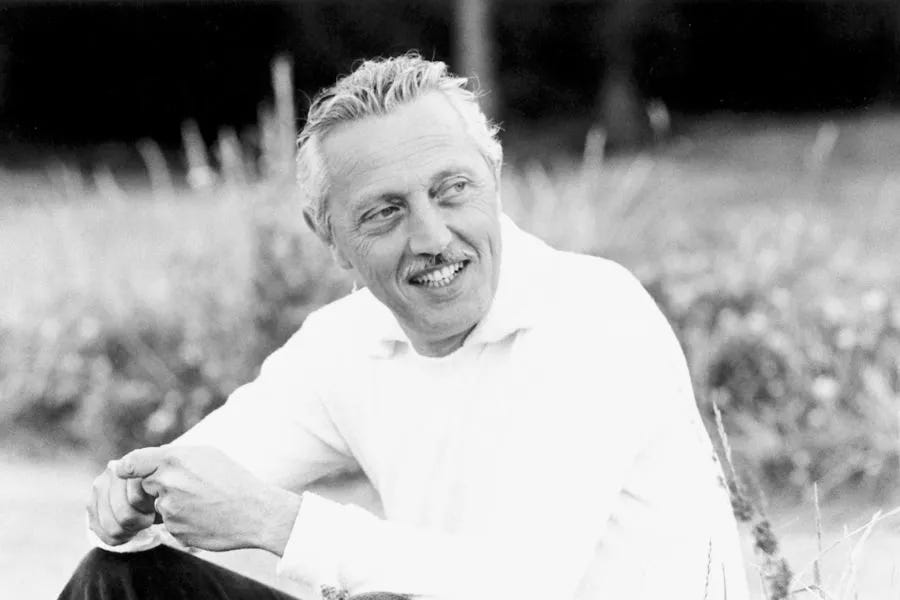
On October 3, 1969, Dr. Jérôme Lejeune took the stage at the American Society of Human Genetics in San Francisco to give the most anticipated speech of the conference. He was one of the world’s foremost geneticists and had been a leading member of the French team that discovered the chromosomal basis of Down syndrome. In large part due to that discovery, Lejeune was receiving the ASHG’s highest honor, the William Allan Memorial Award. His lecture was titled “On the Nature of Men.”
There had been rumblings that Lejeune might use his speech to challenge his colleagues. Society president Kurt Hirschhorn later recalled that he had attempted to persuade Lejeune to focus his address on science. Instead, the 43-year-old scientist stunned the audience with his opening line: “To kill or not to kill: that is the question.” New technology that allowed us to diagnose conditions in the womb, Lejeune stated, confronted the scientific community with that ultimate question.
“We human geneticists have to face everyday reality: disabled children and distressed parents exist,” Lejeune declared. “No formal demonstration being at hand, each of us has to face the challenge, and I believe our response must be guided by two feelings only – humility and compassion.” Even “the most disabled belongs to our kin, because these victims are poorer than the poorest, and because the sorrow of the parents cannot be consoled by science. But should we capitulate in the face of our own ignorance and propose to eliminate those we cannot help?”
Not a single clap greeted his much-anticipated speech; his colleagues were stunned. Later that night, Lejeune told his wife: “Today, I lost my Nobel Prize in medicine.”
***
Jérôme Lejeune was born in Paris in 1926. He received a classical education and his interests ranged from literature to astronomy. He chose medicine, received his doctorate in 1951 and hoped to become a surgeon—but he fell asleep on a Paris train, missed the qualifying exam, and chose instead to work with pediatrician Raymon Turpin to determine the basis of Down syndrome. Down syndrome carried enormous stigma, as it had long been believed to be a side effect of syphilis in the mother. Lejeune and Turpin believed otherwise.
READ THE REST OF THIS COLUMN AT CANADIAN PHYSICIANS FOR LIFE
Related Posts from The Bridgehead: