Part 2 in a series on the little-known Christian Holocaust rescuers of World War II
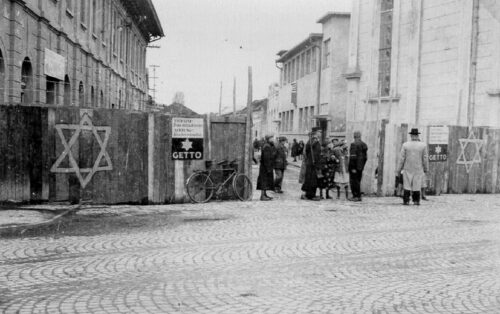
In November 1944, a courier rushed into the offices of the Good Shepherd in Budapest. A little girl urgently needed rescue. Gábor Sztehlo leapt into a car with a colleague and sped to the Jewish ghetto; in the rear apartment of an old house, the Lutheran pastor found a three-year-old girl. A neighbor spotted him and rushed over. There was another little girl in the next house—her parents had fled the ghetto before it could be sealed off. Gábor took her, too. Before they could leave, the harried men were told of a third child, a boy.
Gábor and his colleague headed back through the war-torn city with three children huddled beneath blankets on the floor of their car, desperately navigating to avoid patrols. Nobody in the car knew it at the time, but the daring escapade was part of an extraordinary rescue operation that would save 2,000 Jews—most of them children—in the dying days of World War II. The entire operation lasted less than a year.
***
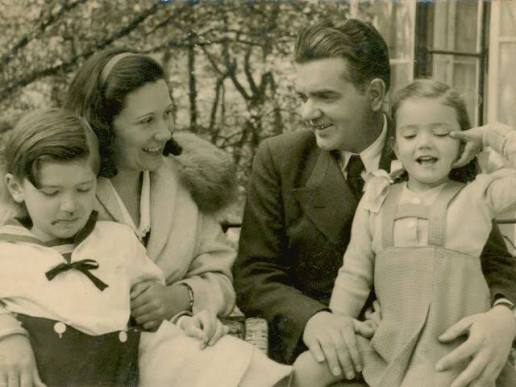
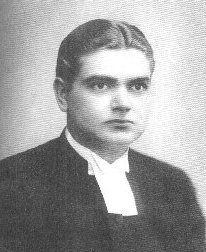
Gábor Szenczy (the family name changed to Sztehlo in 1938) was born in Budapest, Hungary, on November 25, 1909. He studied theology in Sopron and was ordained a Lutheran pastor in 1932. He served as a chaplain in Budapest, Hatvan, and Nagytarcsa before founding the People’s College movement, which promoted social reform and education among the impoverished peasants, in 1937. He traveled constantly, leading camping retreats and conferences and serving as the district pastor at the Nagytarcsa congregation.
When World War II began, Hungary signed the Tripartite Pact in November 1940, becoming an ally of Nazi Germany and participating in the invasion of the Soviet Union. By early 1944, with the Eastern Front collapsing, Hungarian leaders under Regent Miklós Horthy were secretly seeking to negotiate with the Allies and exit the war. Hitler ordered the invasion of Hungary to head off the defection and to secure the country’s oil resources.
On March 19, 1944, Gábor spotted Germans marching into Budapest as he left his city center office in the building of the Episcopal see. It was the beginning of a frantic, desperate year of blood, misery, and miracles.
Until then, Gábor had been largely unaffected by the war beyond bemoaning the insidious effects of Nazi propaganda on the peasants he worked with. He had not been involved in the resistance, and knew of only two colleagues who were—the pastor of a village who refused to report for military service because he believed the war unjust, and a pastor (of Jewish origin) who had helped Slovak partisans and was consequently executed in front of his church altar by the Nazis.
That same day, Gábor was called into his bishop’s office and reassigned. Instead of being a traveling pastor, he would serve as hospital chaplain and work with an organization called The Good Shepherd, tasked with saving Christian children of Jewish origin. He was given little information, less advice, and no funds. He even had to ask the secretary what the Good Shepherd was on his way out of the bishop’s office and was directed to their office. “Go see for yourself, it’s your job after all,” the secretary informed him.
On March 20, Gábor and a colleague met with Friedrich Born, a Swiss humanitarian and a delegate of the International Red Cross. Born asked him a blunt question: What was the Church going to do for the Jews? Scrambling for an answer, Gábor told him that two of the Protestant bishops had spoken on behalf of the Jews in Parliament. But what now? Born asked. The Nazis were here, and catastrophe was imminent.
“I pointed out what I knew at the time, for example, how all denominations were fabricating false registration certificates and writing false data in their registers,” Gábor wrote in his memoir In the Hands of God sixteen years later. “Each parish or congregation was ready to do this much at least, and thereby save many from wearing the yellow star. But unfortunately this was no longer to prove sufficient.” Born made it brutally clear: First yellow stars, then the death camps.
***
The Good Shepherd offices—sparsely furnished, chaotic, crowded with the destitute and desperate—turned into a crisis center. “I do not want to forget this address as long as I live, and I should wish others to remember it too: 5 Lazar Street, Budapest,” Gábor wrote. “Miracles of God happened there.” The leaders—pastor Jozsef Elias, prominent Hungarian Calvinist Imre Kadar, Emil Hajos—risked their lives daily seeking hiding places and distributing food and clothing.
As hospital chaplain, Gábor met with Lutherans of Jewish descent who had attempted suicide. He went from one hospital bed to the next, estimating that 90% of attempted suicides were Jews terrified of the transports. He prayed with them and was horrified by how swiftly fear turned into hatred. “Even hatred can give you strength for awhile, although I was arrested in shock by the realization of this fact. But the hatred that brought forth discrimination created new hatred, and sin engendered sin anew.”
Gábor began searching for places to house the child refugees. After renting the first villa, the solicitor discovered that he intended to hide Jewish children, kept the money, and threatened to report him to the authorities. A second solicitor, associated with the Hungarian fascist Arrow Cross Party, promised that his official connections would help them; instead, the pastors were told that if they did not stop helping the Jews, they would be deported with them.
By July, attempts to save Jews through official channels had been exhausted. On July 15, Gábor found the Good Shepherd office cleared out; it was too dangerous. For a time, he took his family into the countryside.
“Something was about to begin unobtrusively, without negotiations, without any official aspect of it,” he wrote. “God was acting for us, we only had to obey and to be ready to follow through with the things He had begun.” Gábor discovered that foreign diplomatic organizations were eager to help.
The Swiss and Swedish embassies had especially well-organised groups by then. Both embassies issued safe conducts with photographs placing their holders under the protection of the mission in question. The Swiss Consul, Carl Lutz, and the Swedish Charge d’Affairs, Raoul Wallenberg, conducted this work with remarkable valour. Several people were snatched away from the very railway wagons in which they were being sent to annihilation and were thus brought back to life. These saviours also chased after columns of Jews being driven by foot and delayed and frustrated their captors with their safe conducts as long as it was possible.
Wallenberg frequently delivered his life-saving passports into the deportation trains as they were about to leave, thrusting them through the slats, windows, and doors of open cattle cars to the doomed. At one point, he climbed on the roof of a train and began to pass them down to the people, ignoring orders from the German guards to get down and shots fired by Arrow Cross men. When he was done, he would demand that the newly papered passengers be released into his care. Wallenberg likely saved over 30,000 Jews.
Carl Lutz, the Swiss Vice-Consul, issued thousands of passports and protective papers; he and his wife Gertrud even followed the forced death marches of Jews to the Austrian border, handing the Arrow Cross guards Swiss documents and pulling people out of the grim column. He put over 70 homes filled with Jewish refugees under formal Swiss protection, and at one point, leaped into the freezing Danube to rescue a wounded Jewish woman who had been shot by Arrow Cross men. He told her stunned would-be killers that she was a “foreign citizen,” and bundled her into his car. He saved over 60,000 Jews.
***
The Swedish Red Cross partnered with the Hungarian churches, and the work began in earnest. Jewish children were put in clergy homes, boarding schools, ministries, and vestry-rooms. An entire family was hidden in the pulpit of the church in Deak Square. Nunneries, cloisters, and the Benedictine abbey took people in. Church offices manufactured fake birth certificates. Gábor noted in his memoir that every denomination, without exception, proved ready to help. Acts of mercy also took place in the countryside: peasant women brought food to those about to be deported and took Jewish children home with them.
In August 1944, Gábor again met with Born. Houses needed to be procured under the auspices and protection of the Red Cross. Gábor would run Section B, for Jewish children who had been baptized Christian. The International Save the Children Fund would provide the necessary supplies; the Red Cross would provide any necessary funds. Gábor procured a house belonging to his uncle on Gellert Hill behind the Citadel large enough for 35 children. Dormitories were set up, and nurses recruited.
It was the first of many “Homes of the Good Shepherd.” There were worries that so many deeply traumatized children of such varied backgrounds would find it difficult to live with one another, but Gábor noted that instead, “God made a miracle,” and the “sinfulness and viciousness of human nature was simply smothered.”
By October 1944, other homes began to open. People came to see Gábor in his office, asking for hiding places for children and adults; sometimes offering apartments, villas, and other places of refuge. One offeree was the former Lord Mayor of Budapest, who gave Gábor the entire ground floor of his villa. Another offered the procurement of false documents; soon, these would be manufactured in massive quantities at the offices of the Good Shepherd and the International Red Cross. Gábor’s life became a daily frenzy of seeking supplies and hiding places, caring for 150 children and adults per day.
***
On October 15, the Germans backed a coup by the rabidly antisemitic Arrow Cross party, replacing the government of Regent Miklos Horthy and transforming Hungary into a Nazi puppet state. Despite the fact that war was nearly lost, the extermination of the Jews was elevated to a national priority. Born called Gábor into his office and bluntly informed him that he would need to take unpaid leave from all of his ministerial duties, start working fulltime for the Red Cross, and focus exclusively on the rescue operation. Born handed him transfer papers on the spot. As Gábor recalled:
In the last days of October the persecution of the Jews rose to its highest pitch. All boys and men between ten and sixty were declared liable to military service, many were carried away to camps and Arrow-Cross houses, put in transports, and sent to do labour. Our office was full of desperate parents and forlorn children. The delegate stopped pondering over the houses offered to us, and abandoned financial prudence, too. He gave me full authority and supported me with all his might. The whole staff of the delegation went into top gear, and our own transports were constantly on the move, carrying beds, bedding, and kitchenware. During late October/early November we furnished and opened two or three homes daily.
To ward off the Gestapo, each home was given two copies of an official certificate—one for the garden gate and another for the front door, with a third begin sent to the consular office of the Interior Ministry, claiming that the residences fell under the extraterritorial rights of the International Red Cross and that all officials were obligated to defend the rights of the occupants. Each refugee was recorded on a document bearing the letterhead of the IRC. It was bluff. The IRC was not a diplomatic corps and did not have extraterritorial rights.
It worked. When Gábor’s packed office was raided by Arrow Cross men; they fled when told it was under Red Cross protection. “We lived through the ordeal of unbridled passions and God revealed His love to us,” Gábor recalled. “Every day was a sign of guidance for us revealing that Man must return to his Creator.” In yet another miracle, the packed homes of refugees remained largely peaceful. “God made it possible for these little creatures to feel the warmth of love in the cold winter full of violence outside.”
In November, two MPs visited the office to offer the ironworkers’ union headquarters as a refuge, and left cards behind: official documentation, in Hungarian, English, and Russian, certifying that Gábor and his family had been part of the resistance, bearing the seals of the Hungarian National Front and the People’s Front. To be discovered with such documents meant immediate execution—but on January 30, when the Russians arrived, the papers would keep Gábor out of a Soviet Prisoner of War camp.
In December, the delegates were told that they could no longer keep refugee homes outside of the ghetto. The order clearly came from the Nazis, but the Arrow Cross were already preparing to flee, and Gábor and his colleagues decided to stall for time, flooding the authorities with diplomatic-sounding documents and demanding that the Interior Ministry put together a committee to examine the issue. Meetings were held; Arrow Cross men barked angry orders; but the delegates carefully recorded the meetings and did nothing. When the Soviet siege began, the orders were forgotten.
Later that month, the sub-prefect of Pest County sent Gábor a message: “Tell that Lutheran minister that I know him well. Tell him to stop saving Jews or I shall break my horsewhip on his back!” A warning arrived that the homes would be raided on December 18, and Gábor and his colleagues rushed to prepare—baptism certificates, false school documents, anything that might ward off danger. Terrified children were taught to memorize new identities and parents. The raid never came.
“The miracle was done,” Gábor wrote later. “God had acted again. When God is with us, who can stand against us? My heart kept echoing this sentiment. I have no ear for music, nor a voice for singing, but that evening I was incessantly humming or singing aloud: ‘God is our stronghold, our arm and our shield.’ I had never felt Luther’s confessional hymn so true as I did that night. I had never been able to say or pray those words with so much faith and conviction before. We lived through a series of miracles in those days.”
***
Christmas 1944 was celebrated with terror and trembling, and the rescuers and the rescued clung to the message of the angels: “Fear not.” As their Christmas gathering ended, a desperate woman showed up with a three-year-old orphan girl. Gábor’s wife swept her up. “The most beautiful Christmas present: a forlorn child in need of love. We took little Evi home.” On December 26, the Soviet siege of Budapest began, and everyone took to the cellars as a blizzard of mortars, bombs, and machinegun fire began.
On January 4, one more miracle. The head of one of the children’s homes knocked on the cellar door where Gábor’s family were sheltering with five other families. Gábor was struck with terror—had the children been murdered so close to the end? But no—the Germans had escorted her to say that the children needed to be moved to safety, as they were in great danger from heavy fire. Gábor recalled:
The first group soon arrived. When I opened the door I nearly burst out laughing, as I saw the German soldier with a heavily Semitic-looking child on his shoulders warming his cold hands on the soldier’s neck. The sturdy young fellow took the child down with a serious face and gave him to me gently. I felt like crying. What will God not do to save these children! These tough soldiers came one by one with machine pistols hanging from their shoulders and with little boys in their arms.
The Russians arrived around their shelter on January 29, 1945. The Soviet soldiers were about to fire a flamethrower into the shelter, but a Communist resistance member who had recently taken shelter there yelled out in Russian that it was a children’s home, and they were saved once again; Gábor marveled that God had sent them a Communist to save their lives. The Soviets pressganged them into service, and the Lutheran pastor found himself pushing cannons up the street. Despite the chaos, all survived.
Most, however, had lost their families, and on February 2, 1945, the first orphan’s home was founded. Few of the children would be reunited with their families, although there were a few miraculous reunions; two children were found in the home a year later when their mother returned from Bergen-Belsen. By his own calculations, Gábor had organized a network of refuges for over 1,500 children and 500 adults. He was recognized as Righteous Among Nations by Yad Vashem—the first Hungarian to receive this distinction—in 1972.
There are still a handful who remember Gábor. Holocaust survivor Bálint Füzeki is one of them. Bálint’s family was Catholic, but also Jewish. When the Nazis arrived in 1944, they were forced to wear the yellow star. He and his brother István were hidden by nuns with almost seventy other Jewish refugees; his mother also survived, but his father died of typhus in Buchenwald. When the war ended, the family’s home was gone, and István boarded for a time in one of the homes founded by Gábor.
“He lived next door to us,” Bálint told me. He recalled that the fences around Gábor’s Pax institute for children, which operated until 1950, had been destroyed by the war. He never replaced them. In his company, “I felt the atmosphere of freedom for the first time in my life.” He was eager, he said, for people to remember this wonderful man. “It would be a very great pleasure for me if Gábor’s reputation would spread all over the world!”
Gábor was recognized as Righteous Among Nations by Yad Vashem in 1972.
***
“I did what I had to do almost unconsciously,” Gábor recalled. “I faced everyday tasks which were compounded from one day into the next, while having no clear idea what the day after tomorrow would bring.”
It was a dream and at the same time a reality cutting to one’s quick. It can also be called a nightmare: to see that so much human suffering and so much human meanness can exist on earth. At the same time, however, it was a wonderful dream to feel how God’s palpable love did not desert us even then. This dream revealed to me both the unmeasurable dimensions of sin but also the infinity of God’s love, and it is in this way that I found the answer to the tormenting questions of fellow sufferers…I should like to propagate this answer among scholars and other kindred souls occupied by history.
In his memoir, Gábor recalled that he had faced many questions throughout the war and after, asking where divine justice had been in all of the horror. “But that year taught us the lesson that we creatures should not bother our Creator with unnecessary questioning, but should do what He wants of us,” he wrote. All the evils that plague Creation, he concluded, should lead us to one place: the Cross.
“When will we take this sole and most important lesson, this good news? A year is a continuous flow of events in our own lives and that of a nation. But the only important thing is to be able to learn and admit ourselves into the Gospel.”