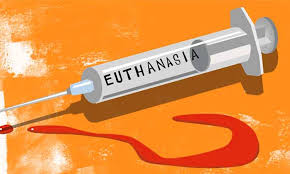
On Tuesday, the Scottish Parliament voted to reject a bill to legalize assisted suicide in a 69-57 vote, with one abstention. The failure of the suicide bill comes after a massive push by euthanasia campaigners to shepherd the legislation across the finish line; just days ago, sponsoring MSP Liam McArthur insisted that the bill was “bullet-proof” after 175 amendments were accepted during the final week of deliberations.
This is the second major loss for suicide campaigners in less than six months, with another significant defeat likely looming. On November 23, Slovenia’s assisted suicide law was overturned by national referendum after a stunning campaign reversed public opinion in less than two months—53% of those who participated voted against assisted suicide. Meanwhile, Labour MP Kim Leadbeater’s assisted suicide bill is tied up in the House of Lords, with over 1,200 amendments tabled and time running out.
Assisted suicide—always referred to by soothingly Orwellian phrases such as “medical assistance in dying”—is broadly popular according to polling in most Western countries. Suicide groups and their political allies quote these data relentlessly. But over the past decade, an indisputable case study has loomed large over the debate: Canada.
In 2016, Canada legalized assisted suicide for adults with “enduring and intolerable suffering” and a “reasonably foreseeable death.” But safeguard after safeguard was torn down by the House of Commons and the courts; in 2021, assisted suicide was legalized for those struggling with mental illness (a law to stop this practice is being debated in Parliament). Canada is on track for 100,000 euthanasia deaths by this summer and has become an international cautionary tale.
Scottish MSPs who voted against the bill cited Canada’s grim expansions —which have been condemned by the UN Committee on the Rights of Persons with Disabilities—as one of their key fears. Canada was cited by the Church of Scotland in its opposition to the bill. Inclusion Scotland, one of the disability rights organizations opposing the bill, noted that “in Canada … we note with concern that there has been divestment in palliative care facilities in favour of medical assistance to die.”
The Royal College of Physicians of Edinburgh noted in a statement (quoted in an open letter signed by a range of Scottish luminaries and published in The Herald) that the Canadian example exposes the likelihood of future expansion:
The College is very concerned to note the speed with which Canada has moved from legislation similar to the proposed Assisted Dying Bill to legislation which allows euthanasia by lethal injection for individuals irrespective of capacity and irrespective of terminal illness.
Scottish MSPs heard horror stories directly from Canadians. Last spring, Alicia Duncan of British Columbia traveled to Scotland to tell her mother’s story. In 2020, Donna Duncan suffered a concussion after a car accident; her mental health suffered, and her daughters found out she was scheduled for assisted suicide in October 2021, just two days before she was scheduled to be killed. They managed to commit her to a psychiatric ward, but after forty-eight hours, Donna was assessed again and killed four hours later.
Because Donna had been starving herself, she was determined to have a “reasonably foreseeable death” and thus be in the same category as someone who was terminally ill. “The Scottish bill echoed many of these same standards, and in some areas appeared even weaker,” Duncan told me. “Safeguards that appear clear on paper can become dangerously subjective in practice, particularly for vulnerable people.”
MSPs were horrified by her story. “It was a very emotional meeting,” she told me. “They were shocked, and very grateful for my testimony. One MSP and I spoke of her concerns about coercion, which I had also emphasized. Another had tears in her eyes as I spoke. It’s one thing to look at a bill, but it is another to hear the real-life implications and the trauma it can cause others.” Alicia Duncan was diagnosed with PTSD after her mother’s death.