Several weeks after the 2016 election, Marjorie Dannenfelser received a voicemail from President-Elect Donald J. Trump. Her organization, the Susan B. Anthony List, had knocked on over a million doors on his behalf in exchange for a lengthy list of pro-life policy commitments, and he was calling to express his gratitude. “I want to just thank you, thank all of the people that were with you, and we’ll never forget,” Trump said.
It was the beginning of an extraordinary partnership between the Trump administration and the pro-life movement, one that would culminate in the overturn of Roe v. Wade on June 24, 2022. For four years, pro-lifers experienced unprecedented levels of access to the White House. The administration acted on their priorities; in a presidential first, Trump even spoke in person at the 2020 March for Life. Pro-life leaders called Trump the “most pro-life president in American history,” a title he embraced with gusto.
That title has come back to haunt the movement. In 2024, Trump ordered the removal of a pivotal line from the GOP platform that had been there since 1984, effectively transitioning the GOP into a pro-choice party: “The unborn child has a fundamental individual right to life which cannot be infringed.” He condemned pro-life protections in states like Florida as “too harsh” and “a terrible mistake,” and he made clear that he does not share the pro-life movement’s conviction that life begins at conception and that government has a responsibility to protect the unborn. (Pro-lifers narrowly defeated the 2024 Florida abortion referendum—which would have enshrined a right to abortion up to twenty-four weeks and struck down the state’s six-week ban—no thanks to Trump.)
Donald Trump only qualified to be the “most pro-life president in American history”—a title he boasted about as recently as January—if the term “pro-life” is reduced to a list of policies, appointments, and public statements rather than personal conviction. Trump was famously pro-abortion until it became politically advantageous to become pro-life. His first-term pro-life record was impeccable, but aside from his evident horror at late-term abortion, his personal views were never clearly articulated. Post-Roe, after a string of ballot-referendum losses in which several states enshrined abortion as a constitutional right, his political calculus changed.
Abortions have increased since Dobbs, as a national network of abortion pill distributors has effectively nullified pro-life laws in over a dozen states by shipping deadly drugs across state lines. The Trump administration could stop this by reversing the Biden-era Covid policy that eliminated the in-person dispensing requirement for abortion pills. Despite intense lobbying from pro-life leaders, it has yet to do so. In October, the Food and Drug Administration approved a second generic abortion pill, lowering costs and expanding access.
In January, to the dismay of pro-lifers, Trump urged GOP lawmakers to be “flexible” on the Hyde Amendment, which has restricted federal funding for abortion since 1976. Dannenfelser phoned him; the call went to voicemail. She bluntly told the Wall Street Journal in May that “Trump is the problem.” Five days later, Reuters reported that pro-life leaders had attended a private White House meeting that a spokesperson for SBA Pro-Life America described as “constructive.” Nevertheless, the administration has been stalling on every major request from the pro-life movement since.
Why did the first Trump administration produce an unprecedented number of pro-life policies, while the second has sought to sideline the pro-life agenda? Who was primarily responsible for pro-life access and pro-life appointments? Many rank-and-file pro-lifers erroneously believe it was Donald Trump.
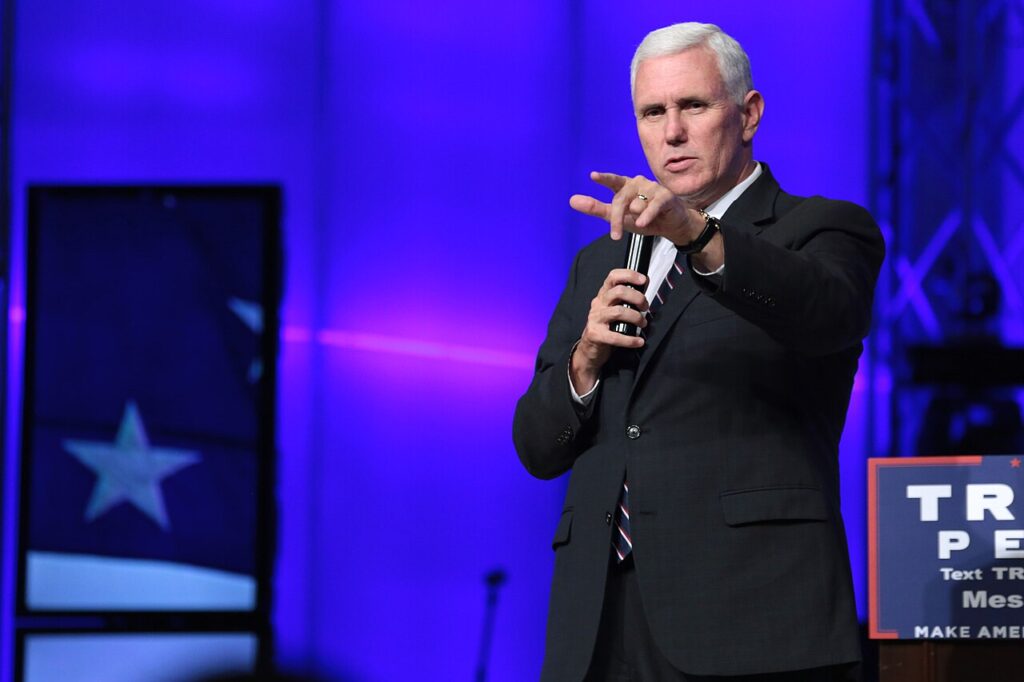
In fact, the primary figure behind many (if not most) of the first administration’s pro-life accomplishments was Vice President Mike Pence. Dannenfelser said as much in an address to Pence’s March for Life reception in January: “There has been no one else more influential in my own leadership than Vice President Pence.” Pence, she told the gathering, led “from the vice president’s office” and was the “moral compass” of the first administration.
Tim Chapman, speaking after Dannenfelser, put it more bluntly: “Vice President Pence was the pro-life movement’s man on the inside for four years. His leadership on the inside is why so many good things happened in that first Trump administration.”
One thought on “How Trump Betrayed the Pro-Life Movement”
Navi says:
Very well-written, though it’s a shame this piece was necessary of course. Trump 2024 is magnitudes better than Kamala Harris would’ve been. That will always be the case. Kamala Harris and congressional Democrats would’ve nuked the filibuster to make abortion on demand (courtesy of the taxpayer) law of the land in every state, added new states to make it impossible for Republicans to win control of congress, gone full out with the woke insanity (it can only be pared back if voters clearly reject it), appointed new litmus-tested pro-abortion justices (perhaps adding new seats to the Supreme Court to make sure they have enough to reinstate Roe and overturn other inconvenient rulings like NIFLA v. Becerra), and continued imprisoning peaceful pro-life advocates. But the “most pro-life president ever” mantra was always ridiculous.
Even during his first administration, Trump mocked Mike Pence for actually being serious about pro-life issues. And now, Trump-Vance is the second-most pro-abortion administration in US history. Clinton, Bush, and Obama never allowed abortion pills to be sent by mail (which has led to the abortion rate being higher than it was pre-Dobbs, not to mention the plethora of forced/coerced abortion victims). What’s often understated in pro-life critiques of Trump is that he actually tried to redefine what it means to be pro-life. Railing against Florida’s heartbeat law is bad enough, but he went further by claiming that some pro-life people thought the law went too far. That is completely false. If someone thinks that a six-week abortion ban with a rape exception, one that would ban only about 50% of the abortions (50% is actually generous considering that abortion pills can be and often are taken before that stage), goes too far then they’re not pro-life (opposed to abortion on demand under most circumstances). The most common “conservative” objection to heartbeat laws is that they take effect before many women even know they’re pregnant. The hidden premise behind this objection is that you have to at least give the woman a chance to figure out she’s pregnant and decide what she wants to do about it. This is not a pro-life position at all, but a pro-choice one (albeit one that’s slightly more limited than allowing abortion up to birth). And so you have the man that pro-life organizations dubbed the “most pro-life president in history” telling people that you don’t actually need to oppose legal abortion in order to be pro-life. Great work.
A few caveats though. I don’t think Trump is necessarily pro-abortion. It’s rather an issue he doesn’t care about one way or the other, and will just take whatever public stance he thinks would win him the most votes. Other politicians do this too of course, they’re just not as shameless about it. Trump would be the second-coming of Mildred Fay Jefferson, Francis Schaeffer, and Cardinal O’Connor all rolled into one if he thought it would benefit him politically. And pro-life advocates still have some sway with the president. Trump trial-ballooned supporting Florida’s pro-abortion amendment, but ultimately opposed it after overwhelming backlash from pro-life advocates. Notably Lila Rose met with him privately before the 2024 election, ultimately giving him qualified support (after previously being anti-Trump) while promising to hold him accountable during his second presidency (rather than the tongue bath pro-life groups gave him during and after his first term). With the Florida amendment coming within 3% of the 60% threshold, that very well could have been decisive. Regarding RFK Jr, while he’s certainly pro-abortion and has no qualifications for his position (other than endorsing Trump’s presidential campaign when he was in a slump after Kamala’s “brat summer”), it’s hard to argue that he’s more pro-abortion than the previous HHS secretary (a man that prosecuted David Daleiden and tried to force PRCs to advertise the abortion hotline, he’s now the frontrunner to be California’s next governor).
2028 will be a tricky election. JD Vance, who has a consistent but potentially surmountable lead, constantly virtue-signals about being pro-life and lectures pro-life people that they should accept mail-order abortion pills due to political reality. That’s his way of saying that he isn’t actually going to show any leadership on a 50-50 issue that’s entirely in the Administration’s hands. Pro-life people would be foolish to make him their standard-bearer, but they probably will unless a strong candidate runs against him and forcefully challenges the policy. It’s not clear who this would be. A good candidate might not even want to run in 2028 if the Trump Administration is unpopular and a Democrat victory looks inevitable.
Marco Rubio is arguably an improvement, but his hands are not clean either. He gave a grandiose speech in 2016 about how he would never let Donald Trump (who he deemed a con artist) take over the Party of Reagan. But then in 2024, when Trump watered down the pro-life party platform (something that pro-life people including Reagan worked very hard on), Rubio accepted the change because Trump was the party nominee. Party platforms are mainly just red meat, and presidential candidates often don’t even read them. But when it came down to Reagan and the pro-life activists versus the Country Club Rockefeller RINOs (who had been trying to water down the pro-life language for decades), Rubio picked the latter. What else would he sell out on?
It’s also still a bit of a stretch to say that the GOP platform is pro-abortion. It’s not a pro-life platform, but it opposes late-term abortion and it’s effectively neutral on regulating abortion early in pregnancy. It praises the Dobbs ruling for allowing states to protect unborn children. A pro-abortion platform would commit to opposing new restrictions on abortion and/or expanding access to legal abortion. Read the DNC platform, or even the Conservative Party of Canada, if you want to see a pro-abortion platform. The platform is definitely pro-IVF, which has led to widespread destruction of human beings.







Very well-written, though it’s a shame this piece was necessary of course. Trump 2024 is magnitudes better than Kamala Harris would’ve been. That will always be the case. Kamala Harris and congressional Democrats would’ve nuked the filibuster to make abortion on demand (courtesy of the taxpayer) law of the land in every state, added new states to make it impossible for Republicans to win control of congress, gone full out with the woke insanity (it can only be pared back if voters clearly reject it), appointed new litmus-tested pro-abortion justices (perhaps adding new seats to the Supreme Court to make sure they have enough to reinstate Roe and overturn other inconvenient rulings like NIFLA v. Becerra), and continued imprisoning peaceful pro-life advocates. But the “most pro-life president ever” mantra was always ridiculous.
Even during his first administration, Trump mocked Mike Pence for actually being serious about pro-life issues. And now, Trump-Vance is the second-most pro-abortion administration in US history. Clinton, Bush, and Obama never allowed abortion pills to be sent by mail (which has led to the abortion rate being higher than it was pre-Dobbs, not to mention the plethora of forced/coerced abortion victims). What’s often understated in pro-life critiques of Trump is that he actually tried to redefine what it means to be pro-life. Railing against Florida’s heartbeat law is bad enough, but he went further by claiming that some pro-life people thought the law went too far. That is completely false. If someone thinks that a six-week abortion ban with a rape exception, one that would ban only about 50% of the abortions (50% is actually generous considering that abortion pills can be and often are taken before that stage), goes too far then they’re not pro-life (opposed to abortion on demand under most circumstances). The most common “conservative” objection to heartbeat laws is that they take effect before many women even know they’re pregnant. The hidden premise behind this objection is that you have to at least give the woman a chance to figure out she’s pregnant and decide what she wants to do about it. This is not a pro-life position at all, but a pro-choice one (albeit one that’s slightly more limited than allowing abortion up to birth). And so you have the man that pro-life organizations dubbed the “most pro-life president in history” telling people that you don’t actually need to oppose legal abortion in order to be pro-life. Great work.
A few caveats though. I don’t think Trump is necessarily pro-abortion. It’s rather an issue he doesn’t care about one way or the other, and will just take whatever public stance he thinks would win him the most votes. Other politicians do this too of course, they’re just not as shameless about it. Trump would be the second-coming of Mildred Fay Jefferson, Francis Schaeffer, and Cardinal O’Connor all rolled into one if he thought it would benefit him politically. And pro-life advocates still have some sway with the president. Trump trial-ballooned supporting Florida’s pro-abortion amendment, but ultimately opposed it after overwhelming backlash from pro-life advocates. Notably Lila Rose met with him privately before the 2024 election, ultimately giving him qualified support (after previously being anti-Trump) while promising to hold him accountable during his second presidency (rather than the tongue bath pro-life groups gave him during and after his first term). With the Florida amendment coming within 3% of the 60% threshold, that very well could have been decisive. Regarding RFK Jr, while he’s certainly pro-abortion and has no qualifications for his position (other than endorsing Trump’s presidential campaign when he was in a slump after Kamala’s “brat summer”), it’s hard to argue that he’s more pro-abortion than the previous HHS secretary (a man that prosecuted David Daleiden and tried to force PRCs to advertise the abortion hotline, he’s now the frontrunner to be California’s next governor).
2028 will be a tricky election. JD Vance, who has a consistent but potentially surmountable lead, constantly virtue-signals about being pro-life and lectures pro-life people that they should accept mail-order abortion pills due to political reality. That’s his way of saying that he isn’t actually going to show any leadership on a 50-50 issue that’s entirely in the Administration’s hands. Pro-life people would be foolish to make him their standard-bearer, but they probably will unless a strong candidate runs against him and forcefully challenges the policy. It’s not clear who this would be. A good candidate might not even want to run in 2028 if the Trump Administration is unpopular and a Democrat victory looks inevitable.
Marco Rubio is arguably an improvement, but his hands are not clean either. He gave a grandiose speech in 2016 about how he would never let Donald Trump (who he deemed a con artist) take over the Party of Reagan. But then in 2024, when Trump watered down the pro-life party platform (something that pro-life people including Reagan worked very hard on), Rubio accepted the change because Trump was the party nominee. Party platforms are mainly just red meat, and presidential candidates often don’t even read them. But when it came down to Reagan and the pro-life activists versus the Country Club Rockefeller RINOs (who had been trying to water down the pro-life language for decades), Rubio picked the latter. What else would he sell out on?
It’s also still a bit of a stretch to say that the GOP platform is pro-abortion. It’s not a pro-life platform, but it opposes late-term abortion and it’s effectively neutral on regulating abortion early in pregnancy. It praises the Dobbs ruling for allowing states to protect unborn children. A pro-abortion platform would commit to opposing new restrictions on abortion and/or expanding access to legal abortion. Read the DNC platform, or even the Conservative Party of Canada, if you want to see a pro-abortion platform. The platform is definitely pro-IVF, which has led to widespread destruction of human beings.