The trial of Lindsay Clancy, the American mother charged with the first-degree murders of her three children in January 2023, began last month. One would hope that the wretched story of a woman allegedly triggered by postpartum psychosis to strangle a five-year-old, a three-year-old and an 8-month infant would simply be too horrific to be turned into the latest social media culture war fueling the gender divide. But it is 2026, the trial is being livestreamed, and content is king.
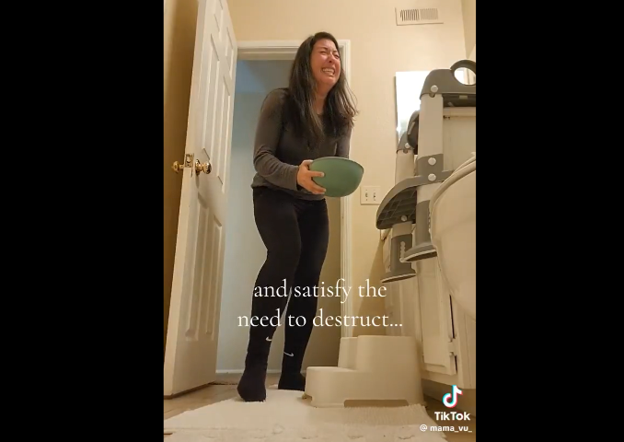
Scores of TikTok videos of women sobbing and holding their babies with the phrase “Same, Lindsay” have gone viral; the disturbing implication that many mothers are on the verge of perpetrating similar horrors provoked equally viral responses. These, predictably, range from boorish minimization of postpartum depression to genuine outrage that women are willing to invoke the name of a child-killer in videos featuring their own babies. Other viral videos feature women shrieking and breaking things to vent their postpartum pain.
The “Same, Lindsay” trend is just the latest manifestation of a deep social sickness created by our new digital habitat. Posting videos of mental health breakdowns—genuine or otherwise—has become normative. I regularly come across clips in my feed that are viscerally disturbing to even glimpse, because the moments being offered to strangers for consumption are so profoundly private. Just a few years ago, only family and the closest of friends would be permitted to witness such awful and vulnerable moments.
I have seen postpartum depression up close, and it is devastating. But refracted through the grotesque funhouse mirrors of social media, it becomes merely content. Women are carefully setting up cameras, checking the angles, pressing record, and then melting down, contorting their faces, weeping uncontrollably. The resulting videos are painstakingly edited and uploaded. We, the voyeuristic public, are invited to consume this crisis porn as content. It is not a cry for help. It is a bid for clicks, likes, and follows.
These videos might as well be custom-made to serve as fodder in the culture war of attrition between the sexes. Those posting them are demanding from viewers recognition of their pain, affirmation of their experience, understanding of how difficult post-partum depression is. But the very act of creating this content appears to affirm the most misogynist possible responses to the reality of post-partum depression by cynically presenting crisis moments as spectacle and inviting the world to watch.
For female influencers and their legions of followers, the response to these videos is evidence that men—particularly conservative men—are cruel, ignorant chauvinists. For many men, the videos appear to be evidence that women (or at least, those in the videos) are unstable, weak, or worse. This is not a genuine debate by any rational definition, and should not be treated as such. The only sane and moral response to these videos is to ignore them and to decline participation in both the voluntary degradation of the subjects and the grotesque trivialization of postpartum depression.