Deep in a Friesland forest during the dark days of 1943, a strange celebration unfolded in a tiny bunker. The dwelling was covered in vegetation and invisible to passersby—not that there were any. There was no path to the hiding place where the Jewish couple and their two children lived, but their rescuers knew the way by heart. On that night, Pastor Pieter Miedema and his wife Joekje had joined them to celebrate four months in hiding.
Pastor Miedema told the family that one day soon, he hoped he could host them in the manse. The father smiled, and raised a glass of apple cider. “Next year in Drachtstercompanie, the Jerusalem of Friesland!” he said. But there would be many dark days ahead for the rescuers and the hidden before light and freedom would return to the Nazi-occupied Netherlands—and not all would survive.
***
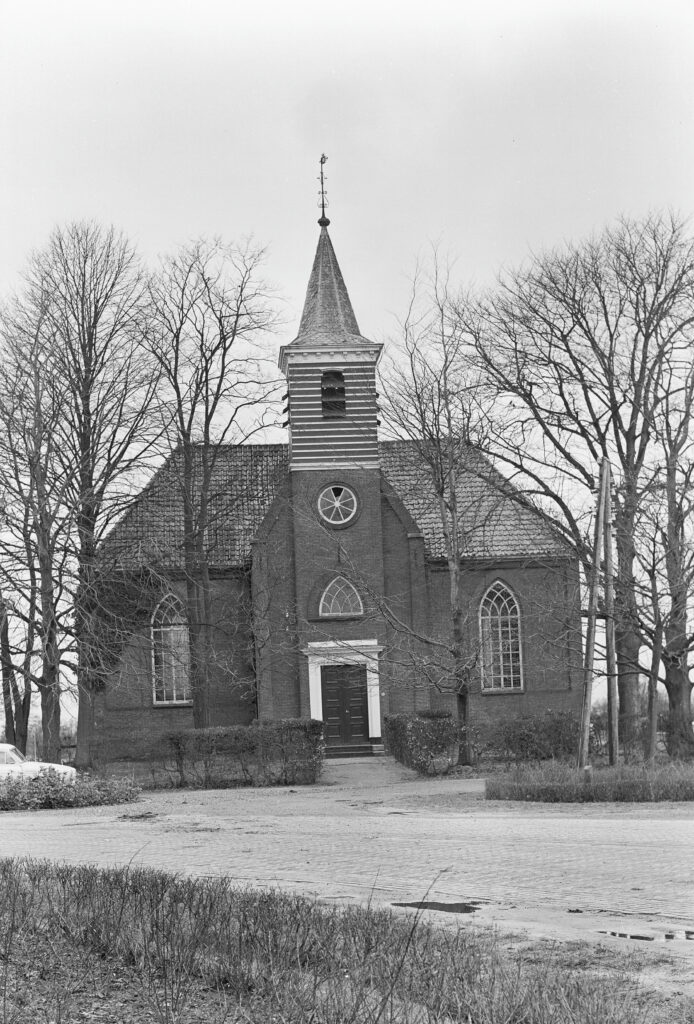
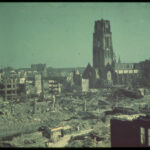
Pieter Miedema was born in 1914 and grew up in the farm village of Venwouden. He met his future wife, Joekje, when they were both fifteen years old. After working as a teacher, he became a Dutch Reformed pastor in 1940, serving a congregation in Drachtstercompanie. On May 10, the Nazis invaded the Netherlands, bombed Rotterdam, and occupied the country. Dutch military resistance held out longest in Zeeland; the last troops surrendered by May 18, and the Occupation was complete.
For some, the surrender was not the end of resistance, but the beginning. As the Nazi persecution of Dutch Jews grew, Miedema called a group of ministers together to address a question that had begun to trouble him: What was their responsibility, as Christians, to the persecuted Jews of the Netherlands?
Deportations had begun in other countries, and the fate of the Jews was clear to those with eyes to see. “There is only one relevant question right now,” Miedema told his colleagues. “What will we do when a Jewish refugee knocks on our door?”
Miedema’s initial disposition towards the German fascists had been interested ambivalence; he found their rhetoric about poverty and the power of the wealthy similar to the Frisian attitude. His ambivalence ended abruptly with the Nazi invasion of Poland and the deadly pogroms against the Jews. When a young man in Miedema’s congregation boasted of joining the Nationaal-Socialistische Beweging (NSB), the Dutch Nazi party, Miedema told him he had made a grave mistake.
The pastors’ discussion that night was nearly identical to similar debates being held by churchmen across the Netherlands. Should spiritual shepherds advise their flocks to risk their lives? Could Christians break the law in good conscience? Miedema had made up his mind: Rescuing the Jews, whom he regarded as God’s Chosen People, was the only moral option. There was a fearful, uncomfortable silence as he took his stand, but no vocal disagreement. Miedema told his wife later that night that they would probably have to make their own plans.
The following Sunday, Pieter Miedema made his private stand public. He asked his congregants to find a place to pray in solitude after the sermon to humbly discern their personal responsibility to the persecuted. Decades later, his wife recounted his words to historian Andre Stein:
[I]magine someone knocks on your door. And that someone is a mother with a small child, both sporting the yellow badge of shame. They are seeking shelter from the sharp teeth of the Nazi wolf. Look deeply into the panic-inflamed eyes of the mother, and then imagine the wolf carrying off the child. Then decide: Will I shut my door to these creatures, or will I usher them into my home, and if need be, share with them my bed?
After the service, the young man who had bragged to him about joining the Dutch Nazi party resigned his NSB membership in tears. Joekje was fearful, but deeply convicted by his words. What would happen to their family if they defied the Nazis? Despite his moral clarity, Miedema admitted to his wife that he was also afraid—but he was more afraid for those who could turn away from such suffering.
Not everyone agreed. It soon became clear that there was an informant in Miedema’s church youth group. Near the end of the winter of 1942, Miedema was ordered to present himself at the Nazi headquarters in Leeuwarden, the provincial capital of Friesland. The local police officer who delivered the summons warned the pastor that this was ominous news, and Miedema and his wife spent a sleepless night.
The following morning, an angry SS officer demanded that he explain his anti-Nazi statements. The two men debated for hours; Miedema insisted that he had not made any comments about Hitler, but that his task was to guide the consciences of his flock. He was finally released with a warning: If the SS heard anything else about Miedema, he would be sent to Mauthausen. In the meantime, he would be watched.
One month after the pastor and his wife welcomed their daughter Sietske in April 1942, Miedema received an urgent phone call from his superior, Rev. Wiersma. A boy needed a place to hide—within 36 hours. Miedema went to a congregant who was a member of the agrarian association, hoping to obtain the addresses of willing farmers. The man turned out to be a member of the NSB. Next, he tried an elder—his own father-in-law—who told him that it was irresponsible to get involved. What about the safety of his own wife and daughter?
Miedema had laid down a challenge to his church. Now, he took it up himself: the boy was hidden in the manse. The energetic boy, unhappy to be cooped up in the small house, was soon moved out to a farm, but his brother Louis promptly took his place. The pleas for help began to arrive steadily. Four more places were needed for the mother and younger brothers; the hosts currently hiding the family were demanding exorbitant payment, which Miedema believed was little better than blood money.
Life was excruciatingly difficult for both the rescuers and their hidden guests. The never-ending boredom broken only by menial tasks; the same four walls all day; and worst of all, having no idea when the war might end and freedom might arrive. The tedium often provoked restlessness, which could be fatal. Driven to the brink of insanity by stifling confinement, some were captured after leaving their hiding places.
There were also culture clashes. Louis asked the Miedemas if they could take in his girlfriend and was told that under no circumstances could that be permitted in a Christian home. Soon after, he had to be moved when a local policeman warned Miedema of a rumor spreading about a Jew hidden in the manse.
Meanwhile, a pastor from Veenwouden called to tell him that the residents of a Jewish children’s tuberculosis sanatorium were about to be deported. A member of the local resistance was asking for hiding places for 14 of the 42 children. The deadline: one week. The pastors began hunting, and within fourteen days, all of the children had been placed.
The refugees kept coming. Early in 1943, a theologian from Utrecht—a friend of Miedema’s—arrived with the NSB on his tail for making fake IDs for the resistance. Next, a couple and their two children. With the help of a forest ranger named van Emst, the family was hidden in a bunker covered in vegetation deep in the conservation area and furnished with curtains, blankets, pillows, and food. Once a week, Miedema made his way through the woods to visit them. The family offered him money. He refused.
Miedema noticed that the children were keeping up with their schoolwork and offered weekly Greek or Latin lessons. It was in the forest bunker that after four months, the grateful family asked Miedema and his wife to join them for a special celebratory dinner.
***
The crisis intensified when mass deportations of Dutch men to work in German factories began. Hiding places became scarce. Miedema tried to place a tailor with the family in the forest; the new arrival, however, was furious that the family did not keep kosher, and after several tense weeks, he had to be moved temporarily into the manse. Hidden upstairs, he set himself to work fixing coats. He was soon joined by a medical student who had refused to take the Nazi oath of allegiance, and the two got along famously.
On November 1, 1943, tragedy struck. Jan Gans, a Jewish member of a resistance group that had blown up a bridge with a German ammunitions truck on it, stayed at the manse. The day he left to go into hiding at a widower’s farm, he was shot to death as he left the village. There had been a trap; Miedema realized that the manse was longer safe. His theologian colleague, the tailor, and the medical student had to be swiftly moved; the medical student, after hiding briefly at the home of a doctor, vanished.
Miedema sent his family to his brother-in-law’s home in Appelscha for safety, and when Joekje returned, her husband was gone. Nazis had descended on the town, searching from house to house, filling trucks with prominent citizens. Searches were underway in Drachtstercompanie, as well. Miedema fled to the forest to wait out the search in the forest bunker. Awful news soon arrived—van Emst, the forest ranger, had been found on the side of the road outside of town, brutally beaten to death.
Five days later, Miedema stopped at the manse, disguised as a beggar, to tell Joekje he was alive. Then, like those he had helped, Pieter Miedema vanished beneath the surface of Dutch society.
***
Joekje took refuge with a neighbor and watched with binoculars as the Nazis ransacked and then sealed the manse. She gave birth to their third child in hiding, and moved to her mother-in-law’s home, where Miedema could occasionally sneak in to see his wife and children. She moved to another family member’s home when her mother-in-law took in two English pilots shot down in a Dutch field. For a year, the Miedemas lived as hunted and hidden refugees.
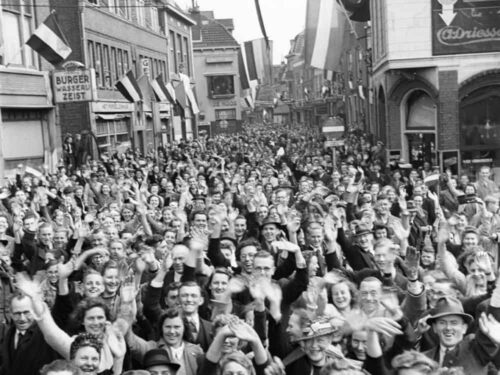
Liberation Day found Pastor Pieter Miedema at his mother’s house with the two English pilots. He reunited with his family a day later—but when they returned to the manse, they found it utterly destroyed. The Jewish family, fortunately, had survived the war, looked after by one of van Emst’s forest ranger colleagues.
Pieter Miedema’s rescue work was formally recognized. One citation came from the General Headquarters of the Resistance Movement in Utrecht; another signed by both General Dwight D. Eisenhower, the Supreme Commander of the Allied Forces, and Field Marshall Bernhard Montgomery. One of the English pilots had apparently spread the story of his courage. The Miedemas were credited with helping around fifty people during the war, including fourteen Jewish adults, fourteen children, resistance members, and downed pilots. In 1952, the family immigrated to Canada.
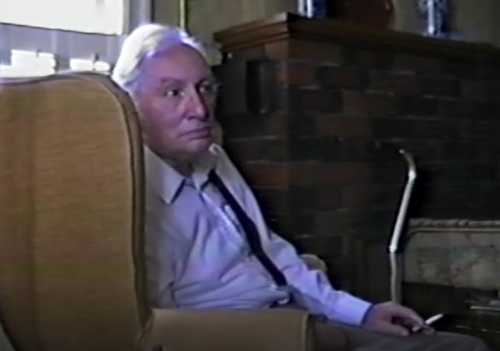
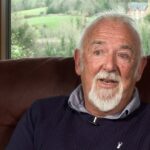
Pieter Miedema in Canada
On September 12, 1993, Pieter and Joekje Miedema were recognized by Yad Vashem as Righteous Among Nations.