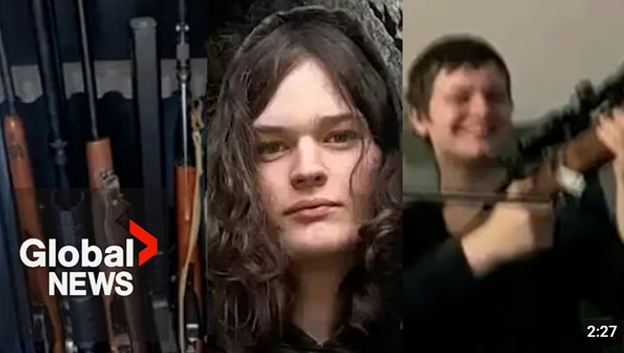
In the wake of the Tumbler Ridge tragedy, Canadians are having two entirely separate conversations about the identity of the trans-identifying male killer who murdered eight people, including six children, in cold blood.
Then, they took direct aim at Canadians who object to the aims of the transgender movement, which would include millions of religious people:
Vulnerable communities are being targeted by right-wing, bad-faith personalities and accounts online in the wake of a national tragedy. Newsrooms can make sure they’re following best practices and avoid stoking an increasingly emboldened hate movement …
Far-right culture warfare in Canada – which exports a disproportionate volume of online extremism globally – has been working in overdrive to opportunistically endanger trans communities in the wake of this massacre of children, a horrifying event of staggering loss.
Media in Canada have been slow to adopt best practices around gender diversity and trans inclusion. The demonization of communities now unwittingly associated with an appalling event of mass violence should galvanize media workers and newsrooms aspiring to report accurately and in keeping with evidence-based approaches to focus on the facts and not cede reality to bad faith actors. Use the right words to responsibly cover this tragedy to do your part to not contribute to a culture that begets another.
This is worth noting carefully. According to the organization that represents Canada’s journalism schools, there is no such thing as trans extremism – but Canada must be very on guard against “right wing” extremists who, by their opposition to gender ideology, quite literally “endanger trans communities.” In our current national climate, this is no small accusation.
Presumably, the B.C. Human Rights Commissioner thinks so. In a short statement published on February 12, the commissioner referred to “hateful beliefs” and then, in an almost unbelievable example of gaslighting, said this:
Mis and disinformation damage our democracy. Without shared facts, we have no shared sense of truth on which to base our political debate and decisions. We can’t solve the problems of our time without some shared methodology about how to understand those problems. In a democracy, we should be able to debate policy approaches to shared concerns, but that is impossible if we are having entirely different conversations based on false information.
That, of course, is precisely what opponents of gender ideology have been saying for years.
If we cannot agree on what a woman is or what a man is, then do not even have the shared facts and shared framework that allow us to correctly identify this shooter as male. The commissioner is simply asserting that the new framework imposed on the country by the transgender movement and their political allies is now our “shared methodology” despite the stubborn nature of biological reality. According to them, reality was changed for all Canadians by a few pieces of Trudeau legislation demanding that they get in line.
This moves from ridiculous to sinister when you realize that these people are in charge of the country, and that they view everyone who disagrees with their “shared methodology” as a potential threat. As Cosmin Dzsurdzsa noted this week, the Royal Canadian Mounted Police warned in 2023 that Canadian women are “gravitating towards far-right movements in Canada”:
In 2023, the RCMP released a report accusing women of leaning “far-right” and being at risk of “violent extremism.”
Now they’re tying themselves in knots to avoid honestly confronting the very real, ideologically motivated violence of a man who pretended to be a woman. pic.twitter.com/BMq6KdDf5j
The RCMP was not, apparently, referring to women like the former B.C. Minister of Child Care, who posted a photo of herself to social media several years ago wearing a t-shirt that read “Protect Trans Kids” and featured a giant knife:
Some context if you see this image floating around. This was the BC Minister of Child Care right around the time the Tumbler Ridge shooter was dropping out of school and descending into heavy prescription drug use. pic.twitter.com/tT1SNuPq3O
No, the RCMP is explicitly referring to people like … Christians. As Staff Sergeant Camille Habel of the RCMP said last year: “If someone you know believes in traditional values and not gender rights, they might be an extremist.”
The RCMP last year: ‘If someone you know believes in traditional values and not gender rights they might be an extremist’
The RCMP top brass is so captured by gender ideology they protect the pronouns of the Tumbler Ridge shooter while treating basic biological views as threats pic.twitter.com/wOdXsQQUSE
It isn’t just the RCMP. In 2024, for example, Canada’s spy agency, Canadian Security Intelligence Service (CSIS), and Canada’s Integrated Terrorism Assessment Centre (ITAC) stated that the parental rights movement is a “violent threat” to the country and that supporters of “parental rights” and the “anti-gender movement” are, in their view, likely connected to neo-Nazi and white nationalist groups (despite many of these parental rights protesters being spearheaded by non-white Canadians).
CSIS spokesperson Eric Balsam affirmed the report, stating that CSIS “assesses that exposure to groups and individuals espousing anti-gender extremist rhetoric could inspire and encourage serious violence against the 2SLGBTQI+ community, or against those who are viewed as supporters of pro-gender ideology policies and events.”
Many have already noted that the Tumbler Ridge tragedy has exposed the extent to which gender ideology dominates the Canadian public square. It is also worth noting, however, that this tragedy has once again revealed what the Canadian establishment thinks of Christians – and anyone else who disagrees with the transgender agenda.