For the past four months, Ben Sasse has been dying in public.
Diagnosed in December with Stage 4 metastasized pancreatic cancer, the former Republican senator has made the extraordinary decision to use the little time he has left—extended, thankfully, by revolutionary trial treatments he is currently taking—to do a series of interviews discussing life, death, and the future of America.
I have enormously admired Sasse for years. His books The Vanishing American Adult (2017) and Them: Why We Hate Each Other—and How to Heal (2018) are both fantastic, and I couldn’t fathom how he found the time to write such in-depth social works while also serving as a senator—and a controversial one, at that. Sasse’s fidelity to conservative principles consistently put him the crosshairs of MAGA loyalists, especially when his opposition to some of Trump’s actions became more vocal.
Sasse was also one of the most eloquent pro-life advocates in the Senate and rarely missed an opportunity to speak or vote in defense of the pre-born. Regardless of your position on or relation to MAGA world, politicians who stick to their convictions because they are convictions are rare, and Sasse’s ill-fated idealism set him apart and damned others by contrast.
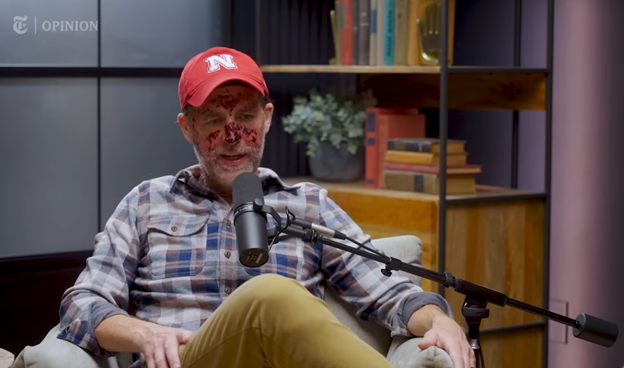
Sasse resigned from the U.S. Senate in 2023, observing that little was being accomplished in a chamber now devoted primarily to partisan theatrics, and left to serve as the president of the University of Florida. Like the equally principled Mike Pence, Sasse was loathed by MAGA world. Now that he is dying, however, people are listening to him again. With an abdomen “chockfull of tumors” and frequently bleeding from his face due to his treatments, Sasse is sharing his wisdom—and his regrets.
Ben Sasse is a Presbyterian, and his Christianity has informed every aspect of his public interviews—with Ross Douthat of the New York Times, on 60 Minutes on CBS, on NPR’s Morning Edition. It has been a very long time since Reformed theology has been discussed in such depth on such public platforms, with the hosts drinking in his words. Sasse is dying, and yet he appears to be so at peace with it. His Christian witness is attractive, and you can almost see some of the mainstream media hosts struggling to grasp it.
On NYT’s “Interesting Times” podcast, Sasse is asked how he deals with the fact that his prayers for healing have not been answered. “I wouldn’t want a sovereign God to defer to all of my prayers with a yes,” Sasse replied. “I’m not omniscient. I don’t know what the weaving together of the tapestry of full redemption should look like, but I know going through the period of suffering that I’m going through is a benefit because it is a winnowing. I’m filled with dross. This suffering is not salvific, but it’s sanctifying, and I’m grateful for it.”
Throughout all of his interviews thus far, Sasse has returned to several themes when asked what he wishes he would have done differently. His advice is worth considering and heeding:
He wishes he had honored the Sabbath more. He didn’t skip church but was consistently tempted to excuse work in the afternoon. “I wish I’d treated the Lord’s Day differently over the course of my life.” He added that he wishes he had guarded better against “digital intrusions into the Sabbath.”
Family dinnertime should be prioritized. “Dinnertime is precious,” he said. “Man, lock up your devices and keep them away from the table and prioritize that time.”
He advises parents to put a limit on work travel—something that, especially as a senator, he did often. “There is a limit to how many trips a month are really worth it,” he reflected. “I lived a road warrior life for a long time, and I kind of had a rule of thumb that seven nights a month at a hotel was the ceiling, but boy, there’s a difference between seven and nine, and there’s a difference between seven and five, and I took way too many trips.” (That one hits particularly hard for me as I travel a lot for work.)
People should live in “thick communities”—especially, if possible, near family. “Family compounds,” Sasse said. “Like, have more cousins and figure out how to live thick with them. There are so many times when we optimize around things that are not nearly as important as family thickness. Boy, I wish we lived down the block from my folks.” If he had more time, he said, he would be brainstorming how to create a family compound with his own children and their families.
Growing up, I thought that living on the same street as my cousins (combining both sides of my family, there are over a hundred) would be quite possibly the coolest way to live; I’d forgotten that until I heard Ben Sasse bring up “family compounds” in multiple interviews. He’s certainly right that most of us—myself very much included—are constantly tempted to optimize for things that are ultimately less important. Something Wendell Berry once asked really stuck with me (sometimes like a bone in the throat): “Do you think it could be a general rule that the only place one is urgently needed is at home?”
Perhaps this is unfair, but watching Ben Sasse’s exit interviews, I was struck by how his witness contrasts with so much of the dopamine-driven “Christian nationalism” discourse and other commentary that passes for “public Christianity” these days. Sasse is unapologetically articulating difficult and even offensive (to secular ears) truths; he has been consistently outspoken on the great moral issues of our day throughout his career. He has compromised nothing. Yet, his interviewers lean in as he speaks, even as they struggle to understand what he is saying. I wonder what would happen if “public Christianity” looked more like Ben Sasse. I’ll be thinking about that–and his advice–for a long time.
Weird, I thought he passed away in December when he wrote that farewell op-ed. Mandela effect, perhaps. Anyway, he’s a very courageous man that wasn’t around for long enough. Maybe even presidential material someday, though he probably had too much integrity to actually make it anywhere in modern presidential politics.
Thanks for profiling Sasse here
I know you haveentilned hom regularly. I appreciate your efforts to find examplary Christian leaders amd make them more known.









Weird, I thought he passed away in December when he wrote that farewell op-ed. Mandela effect, perhaps. Anyway, he’s a very courageous man that wasn’t around for long enough. Maybe even presidential material someday, though he probably had too much integrity to actually make it anywhere in modern presidential politics.
Thanks for profiling Sasse here
I know you haveentilned hom regularly. I appreciate your efforts to find examplary Christian leaders amd make them more known.