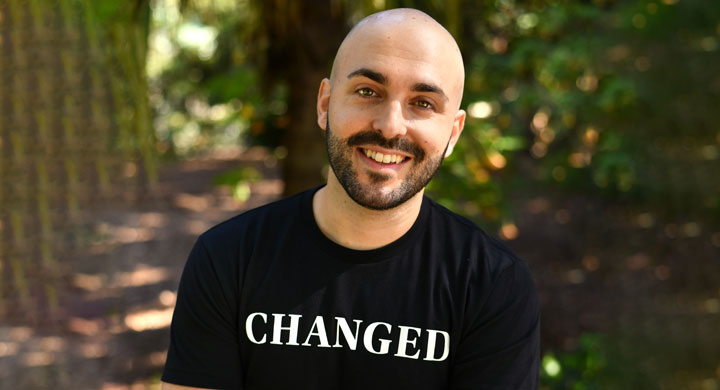
In a landmark victory for freedom of speech and religious liberty, thirty-three-year-old Matthew Grech was cleared by a Maltese court on March 4 after being charged under the country’s 2016 ‘conversion therapy’ ban, the first law of its kind in the European Union. LGBT activists and their political allies had targeted Grech, a Christian who had shared his testimony of leaving a homosexual lifestyle, in order to make an example of him and set a chilling precedent across the EU.
The 2016 Affirmation of Sexual Orientation, Gender Identity and Expression Act made it illegal to “change, repress or eliminate a person’s sexual orientation, gender identity and/or expression,” and further stated that “no sexual orientation, gender identity or gender expression constitutes a disorder, disease, or shortcoming of any sort.” Professionals violating the ban can face fines of up to 10,000 euros and a year in prison.
In April 2022, Grech appeared as a guest on the online program PM News Malta, where he described struggling with his masculinity, living a homosexual lifestyle, and then rejecting that lifestyle when he experienced a conversion to Christianity at age 19. His change, he emphasized, was a spiritual transformation through faith in Jesus Christ, not a medical or therapeutic intervention, but he criticized Malta’s ‘conversion therapy’ ban and affirmed his Christian belief that homosexuality is sinful.
Less than a month after the show aired, activists from the Malta Gay Rights Movement (MGRM)—Silvan Agius, Christian Attard, and Cynthia Chircop—filed reports with the police. All three were high-profile figures. Chircop was co-leader of the MGRM; Attard is a lawyer in the European Commission; and Agius is the Cabinet Expert (with a focus on LGBT issues) for Helena Dalli, the European Commissioner for Equality. As Christian Concern observed: “It is evident that the case was brought to create a precedent across the European Union.”
In an additional attack on freedom of the press, the two hosts of PM News Malta who had interviewed Grech, journalists Mario Camilleri and Rita Bonnici, were also charged.
According to Cynthia Chircop, Grech’s Christian testimony had “triggered [her] emotions,” and she argued that the interview amounted to “marketing” for the International Federation for Therapeutic and Counselling Choice, which Grech had mentioned. Silvan Agius accused Grech of “advertising” conversion therapy and claimed in court that he was a victim. Seemingly to assist Agius in his case, the Maltese government hastily passed an amendment to the 2016 law that criminalized the “advertising” of “conversion therapy practices” in January 2023.
Indeed, Maltese LGBT activist Gabi Calleja, a former colleague of Agius, went so far as to openly admit that the amendment had been necessary to ensure that the police could prosecute Grech. The accusations, the charges, and the rushed amendment to the 2016 law were a transparent attempt to convict Matthew Grech for sharing his Christian testimony to create a chilling effect across Europe, similar to the relentless persecution of Finnish politician Päivi Räsänen for quoting Bible verses that condemn homosexuality.
Grech and the two journalists who interviewed him have now been formally cleared of all charges. A Maltese court found that Grech had not been “advertising conversion therapy” simply for publicly sharing his conversion story; Grech had restated, in court, that he opposes any “coercive or harmful” practices while supporting talk therapy or other voluntary exploration of one’s lifestyle or experiences. The journalists stated the obvious—that they had been hosting a conversation on a current and controversial issue.
Magistrate Monica Vella noted that to convict Grech under the 2023 amendment would constitute retroactive application of criminal law, emphasized that Grech was entitled to share his personal testimony, and stated that the court “has great difficulty in considering as a criminal offence a rational discussion that takes place not only on this particular subject but on any subject whatsoever.” She also affirmed that to restrict Grech’s speech in this matter would be a violation of his religious liberty.
Vella took the extraordinary step of essentially rebuking the LGBT activists who reported the conversation to the police. “This court considers that the greatest mistake one can make is to automatically jump to the conclusion that the law, as promulgated, exists solely for the protection of only one segment of our society, namely all those persons who identify as LGBTIQ,” she stated. She further noted that the sort of therapy Grech had mentioned was not illegal because “as long as there is no service or therapy that is forced upon a person it cannot result in a crime.”